

-
 HATs Raspberry Pi 5
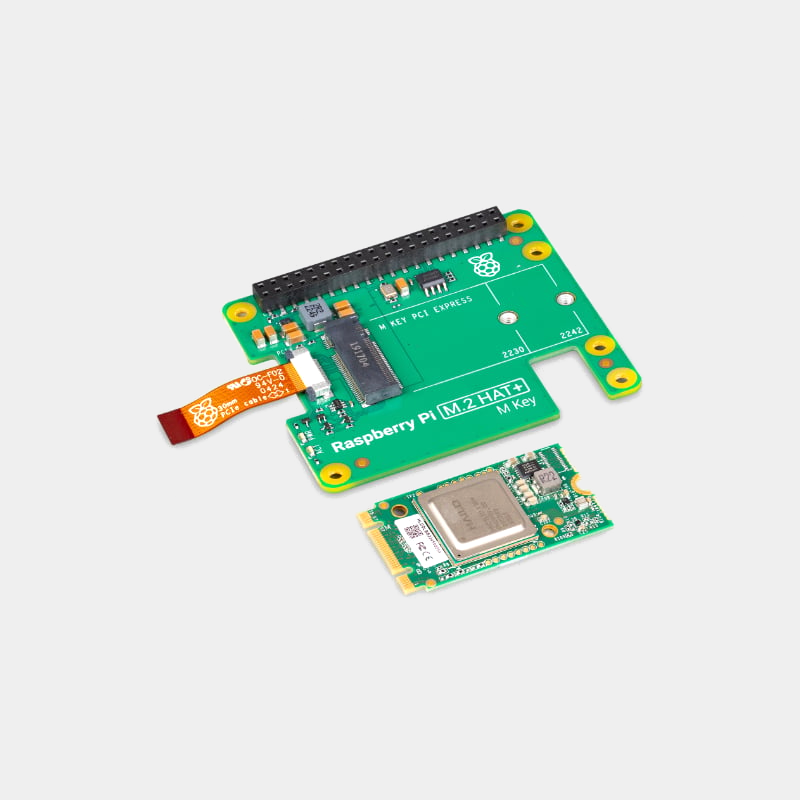
Hailo SC1438 AI Kit for Raspberry Pi 5: M.2 HAT+ and Hailo-8L 13 TOPS module
67,80 € INCL. VATIn stock -

-
-

-
 Raspberry Pi Compute Module boards
Raspberry Pi Compute Module 5
from 126,96 € INCL. VATIn stockSelect options This product has multiple variants. The options may be chosen on the product pageQuick view -

-

-
 Raspberry Pi 5 accessories, Raspberry Pi 4 accessories
official Raspberry Pi USB-C 45 W power supply
14,40 € INCL. VATIn stock -

-
 Raspberry Pi Compute Module boards
Raspberry Pi Compute Module 4
from 65,68 € INCL. VATIn stockSelect options This product has multiple variants. The options may be chosen on the product pageQuick view -
 Raspberry Pi Pico boards
Raspberry Pi Pico
from 4,56 € INCL. VATIn stockSelect options This product has multiple variants. The options may be chosen on the product pageQuick view -

-

-
 Raspberry Pi 4 accessories, Raspberry Pi 5 accessories
Official Raspberry Pi Micro-HDMI to HDMI cable
7,20 € INCL. VATIn stock

Official Raspberry Pi range: original boards and accessories
This page brings together the official Raspberry Pi products, designed by Raspberry Pi Ltd: single-board computers, microcontrollers, power supplies, cases, cameras, displays and HAT expansion boards. All these items are designed to work together, with documentation and an operating system, Raspberry Pi OS, maintained by the manufacturer itself.
 Raspberry Pi 500 | 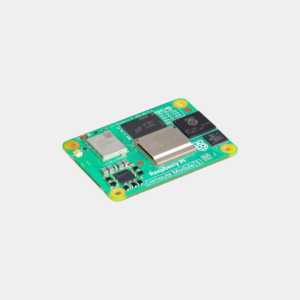 Raspberry Pi Compute Module 5 | 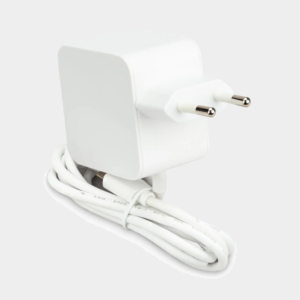 Raspberry Pi USB-C 27W power supply | 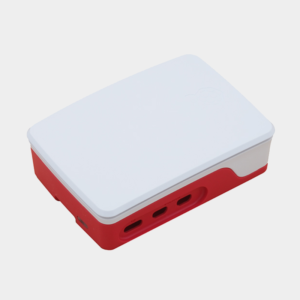 Official Raspberry Pi 5 case |
To discover the Raspberry Pi world as a whole, projects and news, head to our home page. This guide has a more specific goal: to help you choose the right board and the right official Raspberry Pi accessories for your project, without compatibility errors.
Why choose official Raspberry Pi products?
- A calibrated power supply : all models require a 5.1 V power supply. The official units deliver exactly what the documentation recommends for each generation.
- Longevity guaranteed in writing : Raspberry Pi Ltd states that the Raspberry Pi 5 will remain in production until at least January 2036, and the Raspberry Pi 4 Model B until at least January 2034. A real argument for a professional or educational project.
- A unique software ecosystem : Raspberry Pi OS, the Raspberry Pi Imager tool and the Raspberry Pi Connect remote access service are developed by the manufacturer and tested with its hardware.
- Official and tested products, shipped from our stock based in France.
Which Raspberry Pi should I buy?
Each family has its own page, with the boards, compatible accessories and a buying guide.
- Raspberry Pi 5 : the most powerful model, from 1 to 16 GB of RAM, with PCIe for NVMe SSDs. The right choice for a new project.
- Raspberry Pi 4 : from 1 to 8 GB, more energy-efficient, compatible with a very wide choice of cases and tutorials. Produced until at least January 2034.
- Raspberry Pi 500 : a generation 5 Raspberry Pi built into a French AZERTY keyboard. Just add a screen and a mouse.
- Raspberry Pi Zero : 65 x 30 mm, for connected objects and lightweight embedded projects.
- Raspberry Pi Pico : RP2040 and RP2350 microcontrollers, programmable in MicroPython or C/C++, without an operating system.
- Compute Module : the Raspberry Pi as a module to integrate onto a carrier board, for industrial products.
Just starting out? A complete Raspberry Pi 5 kit contains everything to get started, with Raspberry Pi OS already installed on the microSD card. To compare all generations line by line, see our Raspberry Pi comparison table.

Overview of the Raspberry Pi range offered here
Single-board computers
The Raspberry Pi 5 is the brand's flagship model: Broadcom BCM2712 processor with four Cortex-A76 cores clocked at 2.4 GHz, variants from 1 to 16 GB of RAM, a PCIe 2.0 x1 connector and two micro-HDMI 4Kp60 outputs. All its versions and the detailed comparisons are gathered on its dedicated page.
The Raspberry Pi 4 remains a safe bet: BCM2711 quad-core Cortex-A72, 1 to 8 GB of LPDDR4, Gigabit Ethernet, Wi-Fi 5 and Bluetooth 5.0. It consumes less than the Pi 5 and relies on a huge catalog of cases and tutorials.
The Raspberry Pi 500 integrates a generation Pi 5 computer into a keyboard, with 8 GB of LPDDR4X: plug in a screen and a mouse, and it is a complete workstation. For industrial integration, the Raspberry Pi Compute Module 5 reuses the BCM2712 on a module to be mounted on a carrier board, with 2 to 16 GB of RAM and 0 to 64 GB of eMMC depending on the part number.
Finally, two families address compact projects: the Raspberry Pi Zero range (65 x 30 mm) for lightweight connected objects, and the Raspberry Pi Pico microcontrollers, based on the in-house RP2040 and RP2350 chips, programmable in MicroPython or C/C++, without an operating system.
Official Raspberry Pi accessories
- Power supply : for the Pi 5, theOfficial 27 W USB-C power supply delivers 5.1 V at 5 A. With a 5 A source, the Pi 5 provides up to 1.6 A to its USB peripherals; with another compatible power supply, it limits them to 600 mA.
- Protection and cooling : the official Raspberry Pi 5 case includes a PWM fan controlled by the board's dedicated connector and an adhesive heatsink.
- Fast storage : the HAT+ M.2 for Raspberry Pi 5 takes an M.2 2230 or 2242 NVMe SSD via the PCIe 2.0 x1 link, for a system that is noticeably more responsive than with a microSD card.
- Image : the Camera Module 3 features an 11.9 MP Sony IMX708 sensor, in standard (75°) or wide-angle (120°) versions.
- Display : the Raspberry Pi Touch Display 2 7 inch (720 x 1280) connects via DSI and is powered through the GPIO.
Which Raspberry Pi model for which use?
| Use | Recommended model | Key accessories | Why |
|---|---|---|---|
| Office work, family computer, school | Raspberry Pi 500 or Pi 5 with 8 GB | 27 W power supply, micro-HDMI cable | Smooth browsing, two 4K screens, built-in keyboard on the 500 |
| NAS, home server, home automation | Raspberry Pi 5 (4 GB and up) | HAT+ M.2 and NVMe SSD | PCIe link, Gigabit Ethernet, reliable storage |
| Retrogaming | Raspberry Pi 5 or Pi 4 | Ventilated case, USB controllers | Emulation of retro consoles with Recalbox or RetroPie |
| Lightweight connected object, sensor | Raspberry Pi Zero or Pico | Micro-USB power | Low power consumption, small form factor |
| Custom industrial product | Compute Module 5 | Carrier board, antenna | Solderable module, eMMC, long production life |
Need to compare specifications line by line? Our Raspberry Pi comparison table puts all generations side by side.


Compatibility and pitfalls to avoid
- Each generation has its own power connector : micro-USB 2.5 A up to the Pi 3, USB-C 3 A for the Pi 4 and Pi 400, USB-C 27 W recommended for the Pi 5.
- Micro-HDMI : the Pi 4, Pi 5 and Pi 500 use micro-HDMI. Plan for the right cable, as a standard HDMI cable does not plug in directly.
- DSI displays : the Zero range has no DSI connector, so the Touch Display 2 is not intended for it.
- SSD NVMe : the standard HAT+ M.2 accepts the 2230 and 2242 formats, not 2280 SSDs, nor M.2 SATA SSDs.
- microSD card : NOOBS has been discontinued. Install the system with Raspberry Pi Imager, which directly offers the images suited to your model.
- PoE : the Pi 5's Ethernet socket is PoE+ compatible (IEEE 802.3at), those of the Pi 4 and 3B+ are PoE compatible (802.3af). In all cases, a PoE HAT suited to the model is essential.
Projects and guides to get started
New to the platform? Follow our guide to starting a Raspberry Pi for the first time, then pick up ideas from our 10 open source Raspberry Pi projects to try. For the connected home, our Home Assistant and home automation selection brings together sensors and gateways; for retro gaming, our retro gaming kits are ready to play. And if you prefer to receive a ready-to-use machine, our Raspberry Pi assembly service takes care of the build.
Frequently asked questions about official Raspberry Pi products
What is Raspberry Pi Connect?
It is the official remote access service: it links your board to your Raspberry Pi account and allows screen sharing or a remote terminal from a browser. It is installed by default in Raspberry Pi OS Desktop and requires Raspberry Pi OS Bookworm or later. The Lite version of the system includes a variant limited to the terminal.
Which Raspberry Pi should I choose for Home Assistant?
The Home Assistant documentation recommends a Raspberry Pi 5 or a Raspberry Pi 4 with at least 2 GB of RAM, along with its power supply. For a lasting installation, an SSD on the Pi 5 is more robust than a microSD card.
Can you build a NAS with a Raspberry Pi?
Yes. The Pi 5 is the best suited thanks to its PCIe link (NVMe SSD via an M.2 HAT) and its Gigabit Ethernet. The Pi 4 is also suitable with powered USB 3.0 drives.
What do I need to get started with a Raspberry Pi 5?
The board, the 27 W USB-C power supply, a microSD card or an SSD, a micro-HDMI cable and ideally a ventilated case. Starter kits bring these items together.
Which official display should I choose?
The Touch Display 2 comes in 7 inch (720 x 1280) and 10.1 inch (1200 x 1920) versions. Both connect via DSI to Raspberry Pi boards fitted with this connector, not to the Zero range.
Does the Raspberry Pi 500 replace the Raspberry Pi 400?
It keeps the keyboard-computer principle, but with the Pi 5 platform (BCM2712, 8 GB of LPDDR4X) and the 27 W USB-C power supply.
What commitments come with your order?
Shipping within 24/48 h after receipt of payment, pickup point delivery free for orders of 200 € or more, returns possible within 14 days with a return authorization, payment by Visa, Mastercard, PayPal, Apple Pay or Google Pay.
Choose your official Raspberry Pi board and accessories from the grid above: these are original products, tested and shipped from France.
Where can I buy a Raspberry Pi in France?
From a reseller that sells official products from a stock in France. MonRaspberry ships in-stock products within 24/48 h after receipt of payment, offers pickup point delivery from 200 € of purchases and answers in French by e-mail (pi@monraspberry.com).
What is the price of a Raspberry Pi?
It depends on the model and the amount of RAM: a Raspberry Pi Pico or a Raspberry Pi Zero costs much less than a 16 GB Raspberry Pi 5. Up-to-date prices including VAT are shown on each product page. Remember to add the power supply and storage if you buy a board alone, or choose a complete kit.
Should I buy a board alone or a Raspberry Pi kit?
The board alone is fine if you already have the right power supply, a microSD card and the right video cable. For a first setup, a kit avoids compatibility errors: it brings together the board, the official power supply, a case and a microSD card with Raspberry Pi OS.