
Raspberry Pi 5: buy in France, guides and benchmarks
Raspberry Pi 5: prices, versions and kits in France
Introduction
The Raspberry Pi 5 is the most powerful and most expandable generation of the famous board. On the menu: improved responsiveness, dual HDMI 4K, USB 3.0, Gigabit Ethernet, Bluetooth/Wi-Fi and above all access to PCIe via the M.2 HAT+ for ultra-fast NVMe SSDs. Whether you are building a Home Assistanta mini-NAS, a console for retro-gaming or a project forLocal AI, this page brings together the right choices, the right accessories and the right guides to get it right first time.
- 2 to 3× faster than the Pi 4
- Dual 4Kp60 HDR HDMI
- PCIe 2.0 : boot sur SSD NVMe
- Wi-Fi ac, Bluetooth 5.0, Gigabit
- Produced until at least January 2036

Why choose the Raspberry Pi 5? (concrete benefits)
More performance, less friction : smooth browsing, faster compiling, services that start without dragging.
Extensibility : thanks to the M.2 HAT+, add an NVMe SSD that transforms reliability and I/O speed.
Extreme versatility : home automation, media server, dev, robotics, edge AI, remote KVM… you can try anything.
Mature ecosystem : suitable accessories, active community, regular updates and plenty of documentation.
Which model should you choose?
Same processor, same connectivity: only the memory changes. Choose the RAM that matches your project, with prices and availability updated live.
- IoT / sensor gateway (MQTT)
- Small embedded project, controller, script
- Learning Linux on the command line
- Pi-hole / DNS filtrant
- IoT gateway (MQTT), scripts
- Light kiosk / display
- Home Assistant “light”
- Lightweight servers (web, Git, backups)
- Media-server basique
- Mini-NAS + services (Samba/NFS, Jellyfin/Plex)
- Docker stacks (reverse proxy, lightweight DB, apps)
- Advanced retro gaming
- Large Docker stacks / simultaneous services
- Light dev/CI, containers + memory caches
- Experimental lightweight VMs
| RAM | Summary | Example uses | Limitations | Recommended accessories | Recommended storage |
|---|---|---|---|---|---|
| 1 GB | The entry price for a single service. |
|
| 27 W PSUHeatsink | microSD A2/U3An NVMe SSD makes little sense with 1 GB |
| 2 GB | The budget choice for headless tasks. |
|
| 27 W PSUHeatsink + fan | microSD A2/U3NVMe (optional)Of little use with 2 GB except in specific cases |
| 4 GB | 4 GB: the balanced starting point. Ideal for Pi-hole, Home Assistant with a few integrations, lightweight servers, a small media server or a test station. Add active cooling and a 27 W power supply for perfect stability. |
|
| 27 W PSUCase with fan | microSD A2/U3NVMe (reliability +) |
| 8 GBRecommended choice | 8 GB: the headroom to go further. Recommended for advanced retro gaming, a mini-NAS with NVMe SSD, multiple Docker instances, local AI (inference) and more comfortable office use. More memory = more cache, less swapping, a lasting experience. |
|
| 27 W PSUHigh-performance coolingHAT+ compatible caseM.2 HAT+ | NVMe SSD (recommended)microSD as backup |
| 16 GB | For “power users” and heavy multitasking. |
|
| 27 W PSUHigh-performance coolingM.2 HAT+ | SSD NVMeSnapshots/backup réguliers |
Buy a Raspberry Pi 5 in France
The Raspberry Pi 5 is sold as a bare board, in five versions that differ only in memory: 1, 2, 4, 8 or 16 GB of LPDDR4X. The processor (Broadcom BCM2712, four Cortex-A76 cores at 2.4 GHz), the connectivity and the PCIe 2.0 connector are identical on all versions. Choosing your Raspberry Pi 5 therefore means first choosing your RAM, then deciding between the bare board and a complete kit.
- Official Raspberry Pi productsstocked in France
- Shipping within 24/48 hafter receipt of payment, for in-stock products
- Free relay point deliveryon orders from €200
What affects the price of a Raspberry Pi 5
- The amount of RAM : it is the only difference between the versions, and the main price factor. The up-to-date price incl. VAT of each version is shown in the cards above.
- Bare board or kit : a kit adds the power supply, the case, cooling and a microSD card with Raspberry Pi OS pre-installed.
- The essential accessories : a bare board will not start without a suitable power supply and storage medium. Include them in your budget.
Choosing the right reseller
- An official product : Raspberry Pi Ltd guarantees production of the Raspberry Pi 5 until at least January 2036, a real asset for a long-term project.
- Stock in France : no import delays or unexpected customs charges.
- A compliant power supply : the Pi 5 expects 5 V / 5 A over USB-C Power Delivery. With a less powerful charger, it limits the current available to its USB ports.
- A French-speaking contact : by e-mail at pi@monraspberry.com, Monday to Thursday from 9 am to 6 pm and Friday from 9 am to 5 pm.
- A clear right of return : returns possible within 14 days, after approval by our customer service.
Recommended bundles
Complete kits built around the Raspberry Pi 5: board, power supply, case and a system ready to boot.
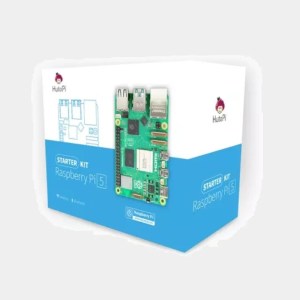 Starter kits
Raspberry Pi 5 Starter Kit
 Home automation kits
Kit domotique Home Assistant Lite : Raspberry Pi 5 & Argon NEO 5
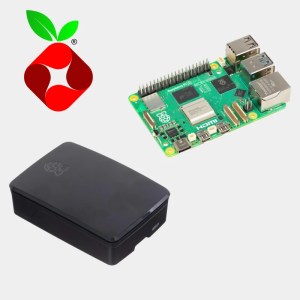 Home automation kits
Pi-hole Ready Kit with Raspberry Pi 5
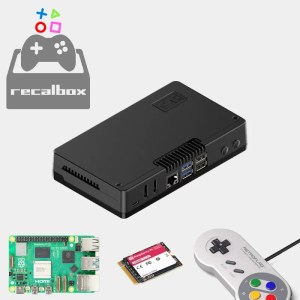 Gaming kits
Recalbox Ultimate console kit with Raspberry Pi 5
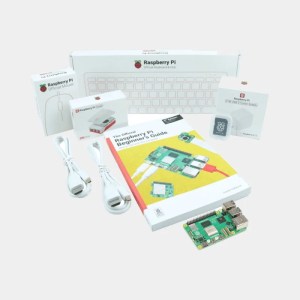 Office automation kits
Raspberry Pi 5 Desktop Kit
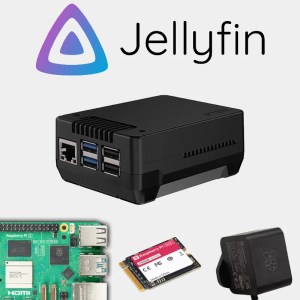 Media kits
Jellyfin Raspberry Pi Kit
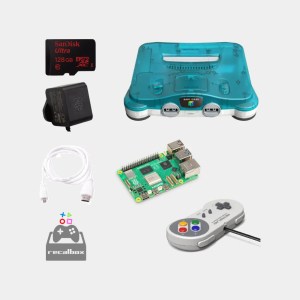 Gaming kits
Raspberry Pi 5 and Recalbox console kit
See also:Starter kitsHome automation kitsGaming kitsOffice automation kitsMedia kits
Bare board or complete kit: which to choose?
The bare board is suitable if you already have a 27 W USB-C power supply, a microSD card and a micro-HDMI cable. For a first setup, a kit avoids the most common compatibility mistakes: power supply too weak, unsuitable HDMI cable, no cooling.
What to add to a bare board
- Official 27 W USB-C power supply (5,1 V / 5 A).
- Storage: microSD card, or a 2230 or 2242 NVMe SSD with the HAT+ M.2 for Raspberry Pi 5.
- Cooling: fan heatsink (Active Cooler) or official Raspberry Pi 5 case with built-in fan.
- A micro-HDMI to HDMI cable if you connect a display.
The ready-to-boot kit
The Raspberry Pi 5 Starter Kit brings together the board, the official 27 W power supply, the official case with fan, the official micro-HDMI cable and a microSD card with Raspberry Pi OS. The other kits (home automation, retro gaming, office, media) are grouped in our kits Raspberry Pi.
Essential accessories
Power supply, cooling, NVMe storage, case: the accessories that make a Raspberry Pi 5 stable and durable.
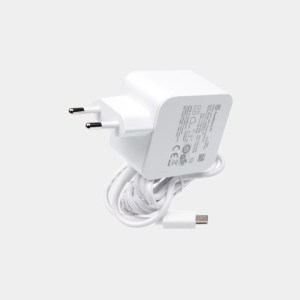 Raspberry Pi 5 accessories
Official Raspberry Pi USB-C 45W power supply
 Raspberry Pi 5 accessories
Official NVMe SSD for Raspberry Pi 5
 Raspberry Pi 5 accessories
Fan / Heatsink for Raspberry Pi 5
 Raspberry Pi 5 accessories
Official Raspberry Pi Micro-HDMI to HDMI cable
 Raspberry Pi 5 accessories
Official Noobs micro SD card
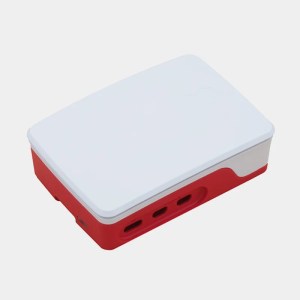 Raspberry Pi 5 cases
Official Raspberry Pi 5 case
 HATs Raspberry Pi 5
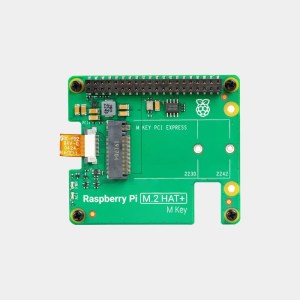
HAT+ M.2 for Raspberry Pi 5
 Raspberry Pi 5 cases
Argon NEO enclosure for Raspberry Pi 5
 HATs Raspberry Pi 5
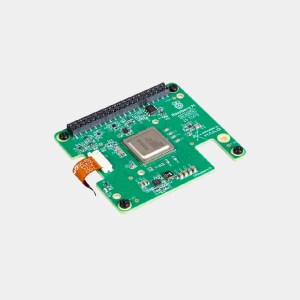
AI HAT+ for Raspberry Pi 5
See also:Raspberry Pi 5 accessoriesRaspberry Pi 5 casesHATs Raspberry Pi 5Raspberry Pi 4 accessoriesRaspberry Pi 3 & Pi 2 accessoriesRaspberry Pi Zero accessories
| Accessory | Role / Why | Recommandations | Ideal for | To plan for | Link |
|---|---|---|---|---|---|
| USB-C 27 W power supply | Stability first: avoids voltage drops, especially with SSD NVMe or HAT+. Fewer disk errors, fewer unexpected reboots. | 27 W / USB-PDShort cable <1 mCertified quality |
|
| See the PSU |
| Cooling(heatsink + fan / active case) | The Pi 5 heats up under load. Active cooling preserves sustained performance and the lifespan of the components. | Quiet PWM fanQuality thermal padsCase with fan |
|
| View the product |
| M.2 HAT+ (SSD NVMe) | The game changer : SSD boot possible, High throughput, reliability during updates. Perfect for Docker, NAS, local AI, lightweight database. | NVMe PCIeHAT+ compatible case27 W PSU |
|
| Discover the M.2 HAT+ |
| AI Kit / AI HAT+ | Hardware acceleration foredge AI. Ideal for vision, object detection, tracking and machine learning demos without the cloud. | Compat. Pi 5HQ/IMX cameraCase with fan |
|
| See the AI HAT+ |
| Storage: microSD & SSD | microSD A2/U3 : simple, affordable, perfect to get started. SSD NVMe : the pro solution for speed and robustness (logging, snapshots, containers). | microSD A2/U3SSD NVMe via M.2 HAT+Backups réguliers |
|
| microSD cardsSSD NVMe |
| Pi 5 / HAT+ compatible cases | Protects the hardware and ensures proper airflow . Cases such as Argon40 offer a good balance between design and cooling. | Efficient airflowCompat. HAT+Easy port access |
|
| See the cases |
Essential accessories for your project
Home Assistant (local home automation)
Install Home Assistant OS or Docker, connect your Zigbee/Matter sensors (via a dongle), automate lighting, heating, security. With an SSD NVMe, you gain reliability (snapshots, restore).
Mini-NAS & media-server
File sharing (Samba/NFS), Plex/Jellyfin, family backups. The combination Pi 5 + M.2 HAT+ + SSD NVMe delivers very comfortable throughput and responsiveness for home use.
Retro gaming
With active cooling, the Pi 5 handles emulation of many systems with reduced latency. Add quality controllers and enjoy a quiet, compact and energy-efficient setup.
Pi-hole + Unbound (private DNS)
Network-level ad and tracker blocking, reduced DNS latency , improved privacy. Integrates seamlessly with an ISP router.
Local AI (vision)
With theAI Kit/HAT+, run model inference at the network edge: presence detection, counting, image classification, without sending data to the cloud.
PiKVM (KVM over IP)
Access a PC/server as if you were sitting in front of it (remote keyboard/video/mouse). Essential for troubleshooting a headless server or a stubborn PC.
Benchmarks & compatibility
CPU/GPU : a clear step up from the Pi 4 → more responsive interfaces, faster compiling and transcoding (depending on load).
PCIe → M.2 NVMe : stable I/O, lower latency, boots faster and updates without stress.
Video & connectivity : dual HDMI 4K, USB 3.0, Gigabit Ethernet, Bluetooth/Wi-Fi.
HAT+ : a new generation of more robust extensions (M.2, AI, …). Check case compatibility if you stack boards.
Astuce : if you want a system “that lasts”, choose 27 W power supply + active cooling + NVMe SSD. You will feel the difference every day.
| Criteria | Raspberry Pi 5 Recommended | Raspberry Pi 4 Model B | Practical effect / for whom |
|---|---|---|---|
| CPU | Broadcom BCM2712, 4× Cortex-A76 @ 2.4 GHz + ResponsivenessSmoother Docker | Broadcom BCM2711, 4× Cortex-A72 @ 1.5 to 1.8 GHz OK for light services | More responsive interfaces, faster compiling and transcoding → comfort for dev/Docker. |
| GPU & video | VideoCore VII, dual 4Kp60 (HDR), HEVC 4Kp60 decoding | VideoCore VI, dual display up to 4K, HEVC 4Kp60 | Nicer HTPC/office use, more modern video pipeline on the Pi 5 side. |
| PCIe → M.2 NVMe | ✓ PCIe 2.0 x1 via FFC → M.2 HAT+ (boot NVMe possible) | ✕ No accessible PCIe (except CM), microSD/USB boot | Stable I/O, lower latency, worry-free updates → perfect for NAS/Docker/local AI. |
| USB / microSD / MIPI | 2× USB 3.0 + 2× USB 2.0 (BW >×2), microSD SDR104 (x2), 2 MIPI transceivers (4-lane) | 2× USB 3.0 + 2× USB 2.0, microSD standard, 1 DSI + 1 CSI 2-lignes | Faster peripherals, snappier SD cards, more flexibility for cameras/displays on the Pi 5. |
| Display & connectivity | 2× micro-HDMI 4Kp60 + HDR, GbE, BT 5.0, Wi-Fi ac | 2× micro-HDMI (up to 4Kp60), GbE, BT 5.0, Wi-Fi ac | More comfortable dual-screen and media setup on the Pi 5 (similar networking). |
| Power supply | USB-C 5 V / 5 A (USB-PD), power button, PoE+ via HAT 27 W recommendedHAT/NVMe stability | USB-C 5 V / 3 A, PoE via HAT | More headroom for NVMe/HAT on the Pi 5 → avoids voltage drops. |
| Memory | LPDDR4X-4267, options 1/2/4/8/16 GB | LPDDR4, 1/2/4/8 GB | More cache/multitasking possible on the Pi 5 (8 to 16 GB). |
| Expansion | Ecosystem HAT+ (e.g. M.2 HAT+, AI HAT+) | “classic” HATs | Faster/more robust peripherals on the Pi 5; AI Kit/HAT+ for local AI. |
| Recommended use cases |
|
| ✓ Pi 5 : future-proof. • Pi 4: OK on a tight budget & for simple needs. |
Our recommended guides
Frequently asked questions about the Raspberry Pi 5
Which Raspberry Pi 5 version should you choose: 1, 2, 4, 8 or 16 GB?
The 1 GB version, the cheapest, is enough for a small embedded project or a sensor gateway. For a single headless service (Pi-hole, gateway, small server), 2 GB gives more headroom. The 4 GB version suits most home automation and learning projects. The 8 GB version is the most versatile for office use, a NAS or several Docker containers. The 16 GB version is aimed at heavy simultaneous workloads.
4 GB or 8 GB for Home Assistant?
4 GB is enough for a simple installation. Choose 8 GB if you stack integrations, heavy add-ons or other services on the same board.
Where to buy a Raspberry Pi 5 in France?
From a reseller that stocks official boards in France. At MonRaspberry, in-stock products ship within 24/48 h after receipt of payment, with French-speaking customer service and returns possible within 14 days.
Is the Raspberry Pi 5 sold with a power supply?
No, the board alone is supplied without a power supply. Use the official 27 W USB-C power supply (5.1 V / 5 A), or an equivalent good-quality USB-C Power Delivery power supply: it is essential with an SSD or a HAT+. With a power supply that cannot deliver 5 A, the Raspberry Pi 5 limits its USB ports to 600 mA in total.
Can I power demanding USB peripherals?
Yes, within the limits of the ports: 1.6 A in total with a 5 A power supply, 600 mA otherwise. For external drives or devices that draw a lot of current over USB, use a powered hub instead.
You can also choose theofficial 45W power supply for extra comfort.
What is the difference between the Raspberry Pi 5 and the Raspberry Pi 4?
Raspberry Pi Ltd announces a processor up to three times faster than the previous generation. The Pi 5 adds a PCIe 2.0 connector for NVMe SSDs, a power button, a real-time clock and two MIPI camera or display ports. Full details are in our Raspberry Pi 5 vs Raspberry Pi 4 comparison.
Can I reuse my Pi 4 accessories?
Some, yes, such as microSD cards. A Pi 4 5 V / 3 A USB-C power supply works, but limits the USB ports to 600 mA in total. Pi 4 cases are not suitable: on the Pi 5, the Ethernet and USB ports are swapped. Also check the compatibility of your HATs.
Can a Raspberry Pi 5 boot from an SSD?
Yes. With the M.2 HAT+, the Raspberry Pi 5 takes a 2230 or 2242 NVMe SSD on its PCIe 2.0 x1 link and can boot directly from it. It is the most robust solution for 24/7 use (NAS, Docker, AI).
What read/write performance can you expect from an NVMe SSD?
It is higher than that of a microSD card and very comfortable for services: everyday use feels noticeably smoother.
Does the Raspberry Pi 5 need a fan?
Yes, as soon as it works under load for long periods: without cooling, it lowers its clock speed to limit its temperature. The official Active Cooler or the official case with fan are enough for everyday use and ensure sustained performance.
Is the AI Kit/HAT+ compatible with the Pi 5? What is it for?
Yes. It accelerates inference (vision, object detection, classification) locally. The AI HAT+ comes in 13 TOPS (Hailo-8L) and 26 TOPS (Hailo-8) versions; theAI HAT+ 2 (Hailo-10H, 40 TOPS INT4, 8 GB of dedicated RAM) also targets language models.
Which OS should you choose?
Raspberry Pi OS to get started (its current version, released in October 2025, is based on Debian 13 “Trixie”). Otherwise Home Assistant OS, LibreELEC or Ubuntu depending on your use.
Is the Pi 5 suitable for a small Docker server?
Yes, especially with an NVMe SSD. It is perfect for hosting a few containers (reverse proxy, lightweight database, media…).
Is there a risk of data corruption?
It is reduced with an NVMe SSD and a stable power supply. Make regular backups, especially before updates.
Can I use it as an office PC?
Yes for the web, e-mail or light coding. For heavy software, an x86 mini PC will be more comfortable.
How long will the Raspberry Pi 5 be manufactured?
Raspberry Pi Ltd is committed to producing the Raspberry Pi 5 until at least January 2036.
Ready to switch to the Raspberry Pi 5?
Stock in France, shipping within 24/48 h after receipt of payment for in-stock products.