Description
OpenWrt One: the official router of the OpenWrt project, made by Banana Pi
L'OpenWrt One (OpenWrt One/AP-24.XY) is the first board designed by the OpenWrt community itself, in collaboration with Banana Pi, which manufactures and distributes it. Built around the MediaTek MT7981B (Filogic 820) and the MT7976C dual-band Wi-Fi 6 chip, it offers a 2.5 GbE port, a Gigabit port, an NVMe slot and dual flash memory that makes it virtually impossible to "brick". Its sales are also intended to bring revenue to the OpenWrt project.
Highlights
- Official OpenWrt support : images published on the OpenWrt firmware selector, shipped with OpenWrt version 24.10.
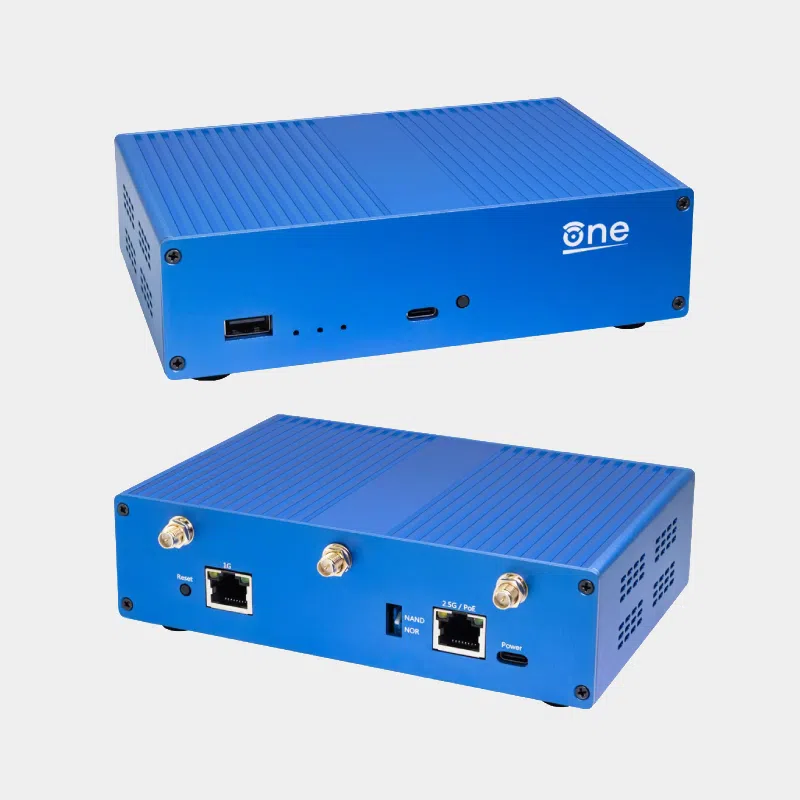
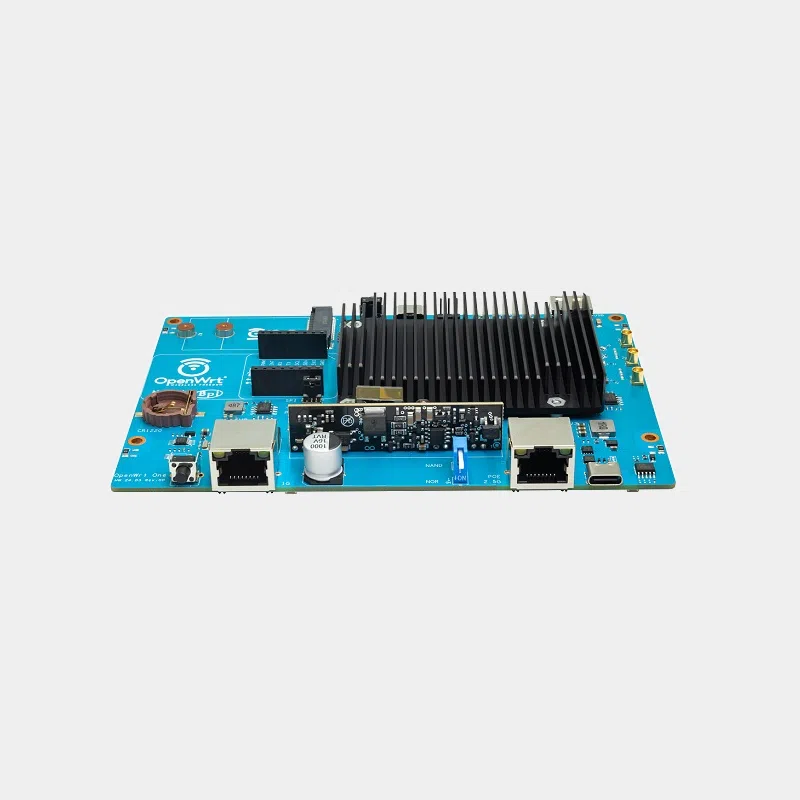
- Virtually unbrickable : 256 MB of SPI-NAND for the system and 16 MB of write-protected SPI-NOR for recovery, chosen by a boot selector switch.
- 2.5 GbE WAN and Gigabit LAN, Wi-Fi 6 2×2 at 2.4 GHz and 3×3/2×2 at 5 GHz with "zero-wait" DFS.
- NVMe M.2 2230/2242 (PCIe Gen2 x1) for local storage, logs or containers.
- Flexible power : USB-C PD 15 V or PoE 802.3af/at via the WAN port.
- Designed for tinkering : driverless USB-C console, mikroBUS socket, JTAG, hardware watchdog, battery-backed RTC clock.
Technical specifications
In the box
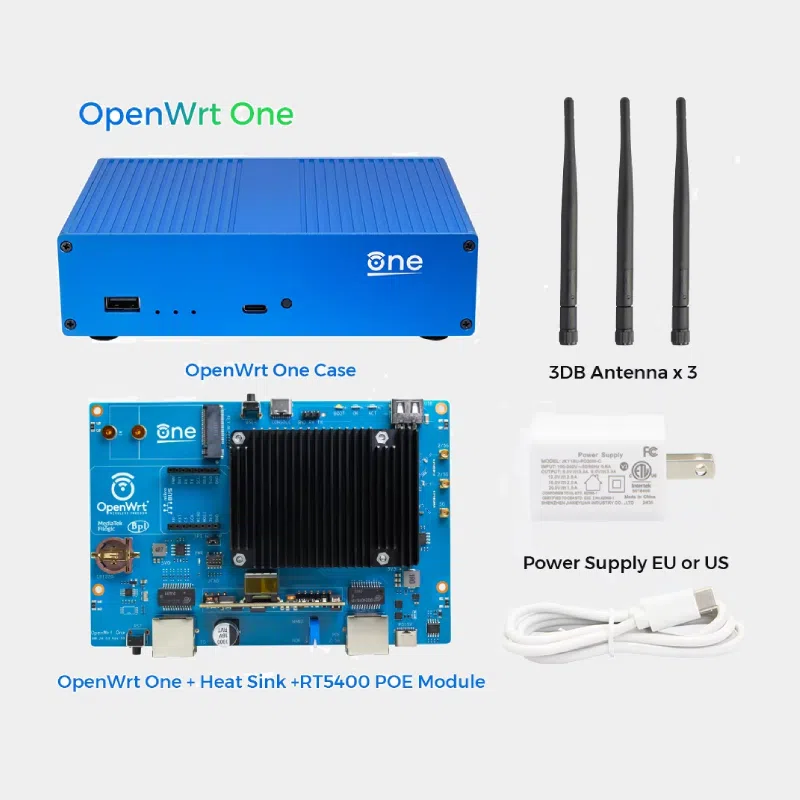
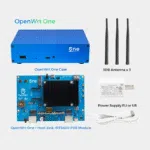
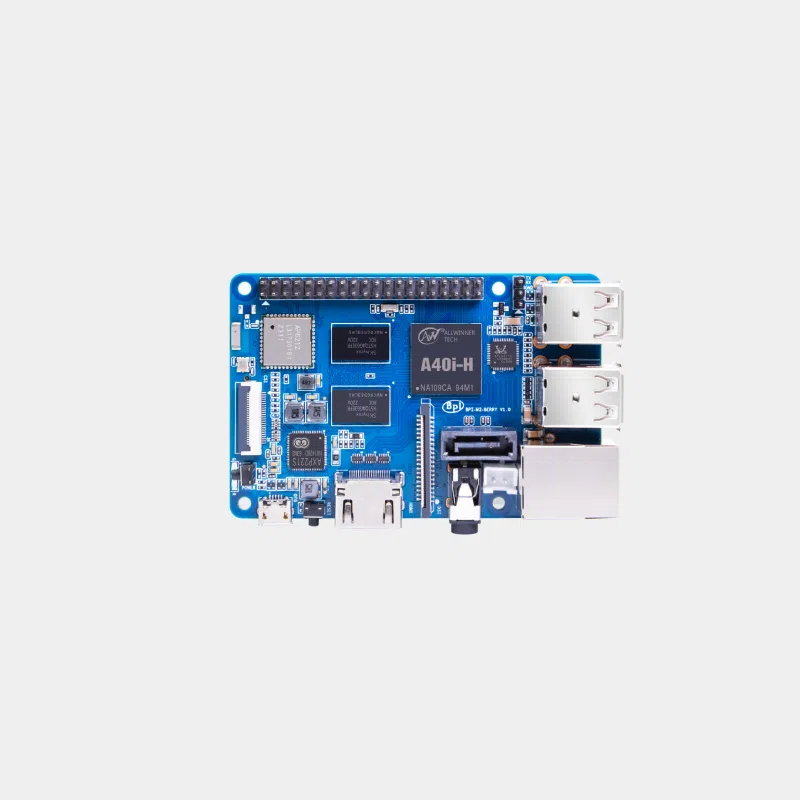
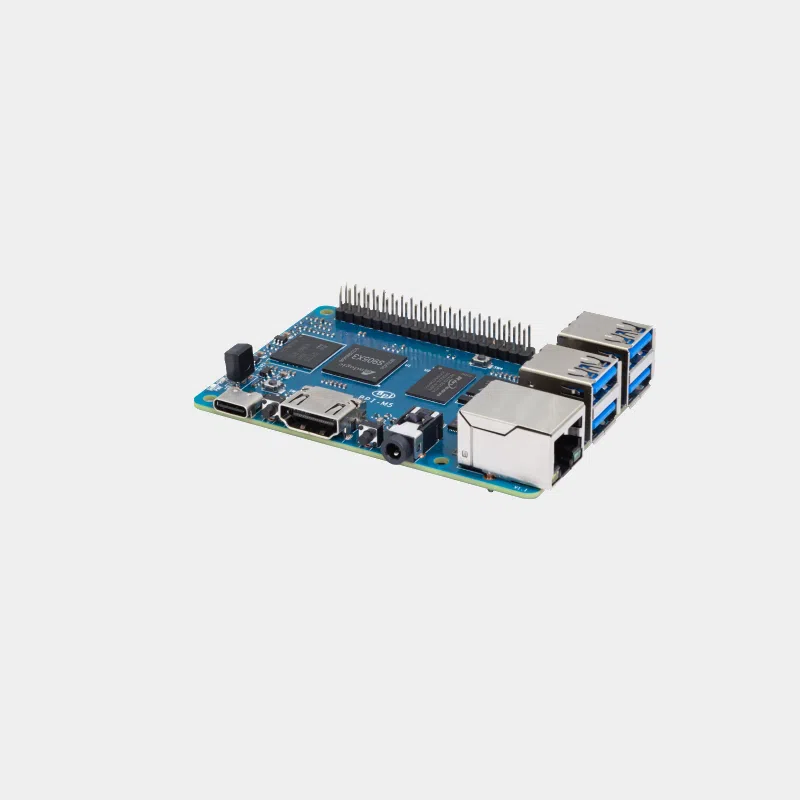
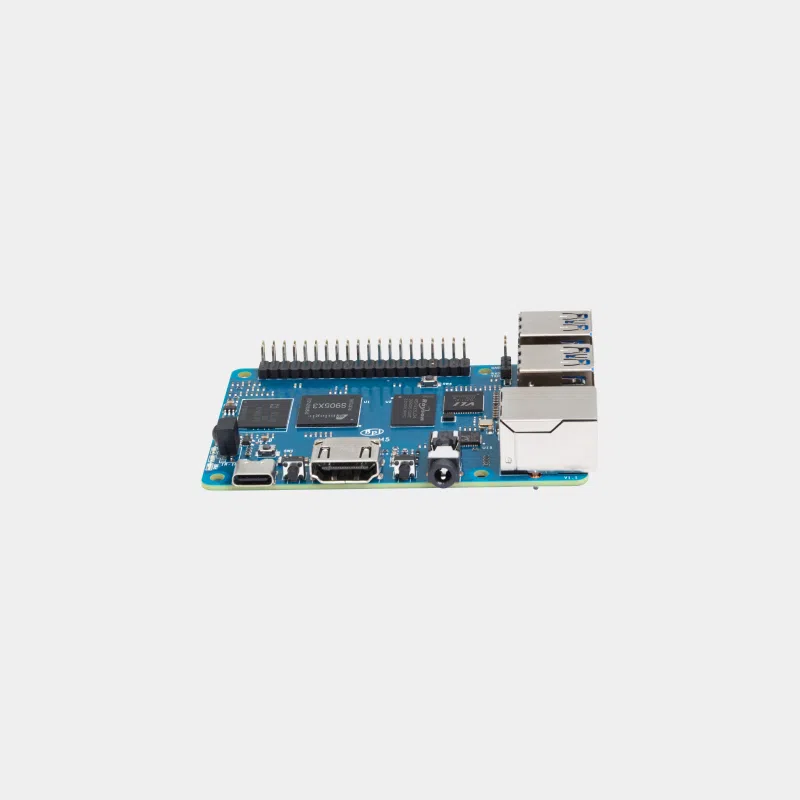
- The OpenWrt One board fitted with its heatsink.
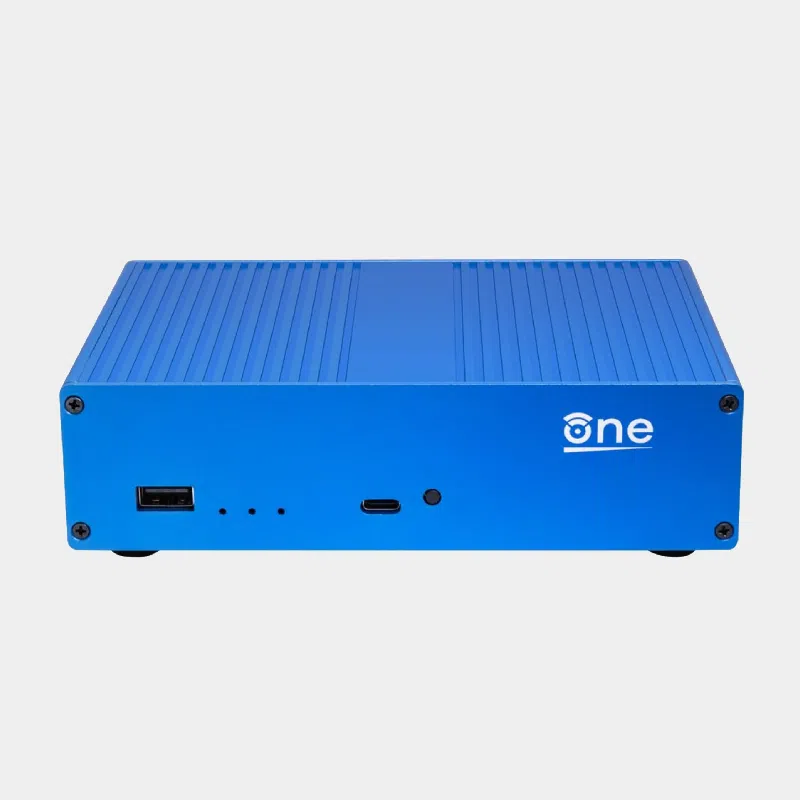
- A metal case.
- The PoE module.
- Three Wi-Fi antennas.
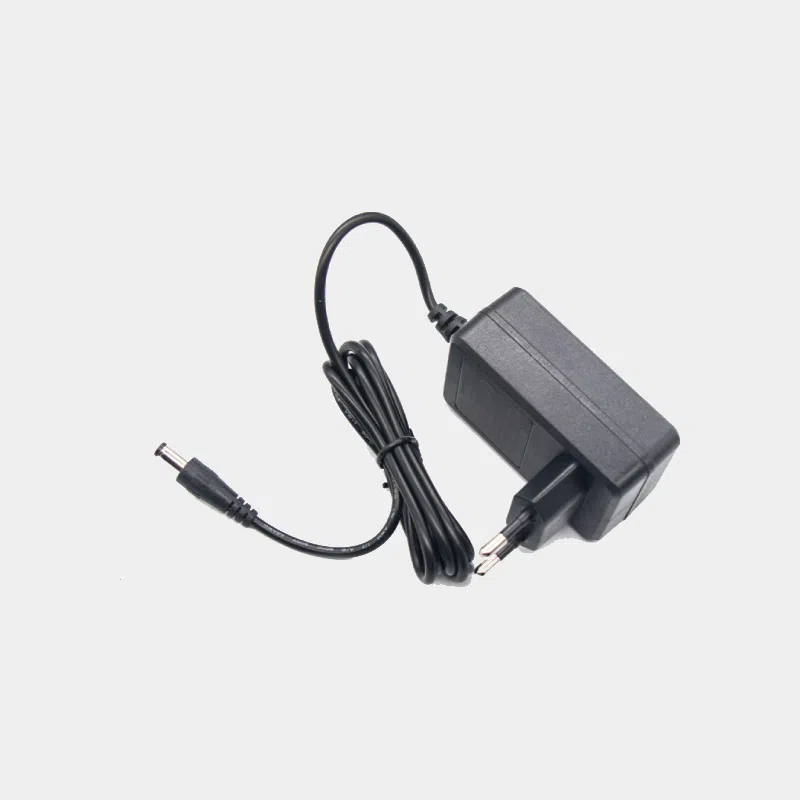
- A power supply.
- Not included: NVMe SSD and CR1220 clock battery.
Which one should you choose?
The OpenWrt One is the best choice for anyone who wants a router maintained by the OpenWrt developers, with updates from the main project. For 10G or built-in 5G, step up to the BPI-R4 Pro or the R3 Mini.
Compatibility and pitfalls to avoid
- SSD : NVMe only, in 2230 or 2242 format, no M.2 SATA or 2280 SSDs.
- PoE : power comes through the 2.5 GbE WAN port. An injector limited to Gigabit will cap this port at 1 Gbit/s.
- Boot switch : leave it on NAND for normal use; the NOR position is for full recovery.
- Clock : to keep the time when powered off, add a CR1220 battery.
- Wi-Fi : 1 GB of RAM and a dual-core SoC are enough for a home or small office, not for 10G routing.
Recommended accessories
Uses and projects
- Replace your ISP box router and keep control of the firewall, VLANs and QoS.
- Block ads and trackers for the whole household: see our AdGuard Home guide.
- Ceiling-mounted PoE access point : read PoE explained.
- Homelab : NVMe SSD for logs, file sharing or community Debian.
Frequently asked questions
What is the OpenWrt One?
It is the first router designed by the OpenWrt project, made by Banana Pi. It is officially supported and its schematics are published.
Which version of OpenWrt is installed?
The board ships with OpenWrt 24.10 and receives images from the project's official firmware selector.
Can it be powered via PoE?
Yes, 802.3af or 802.3at via the WAN port, thanks to the PoE module. Otherwise, use USB-C PD 15 V.
Which SSD should I choose?
An M.2 2230 or 2242 NVMe. It is detected automatically at the next boot.
How do I recover the board after a mistake?
Set the selector to NOR, hold the front button and power on: the rescue system reflashes the NAND from a USB flash drive.
Can I install something other than OpenWrt?
Yes, a community project lets you run Debian on it, but OpenWrt remains the intended use.
See all Banana Pi routers. Order your OpenWrt One on monraspberry.com: official, tested product, stock based in France, shipped within 24/48 h of payment, free pickup point delivery on orders from €200, returns within 14 days with return authorization, and payment by Visa, Mastercard, PayPal, Apple Pay or Google Pay.