

Raspberry Pi 5 PoE Kit
133,90 € – 634,90 €Price range: 133,90 € through 634,90 € INCL. VAT
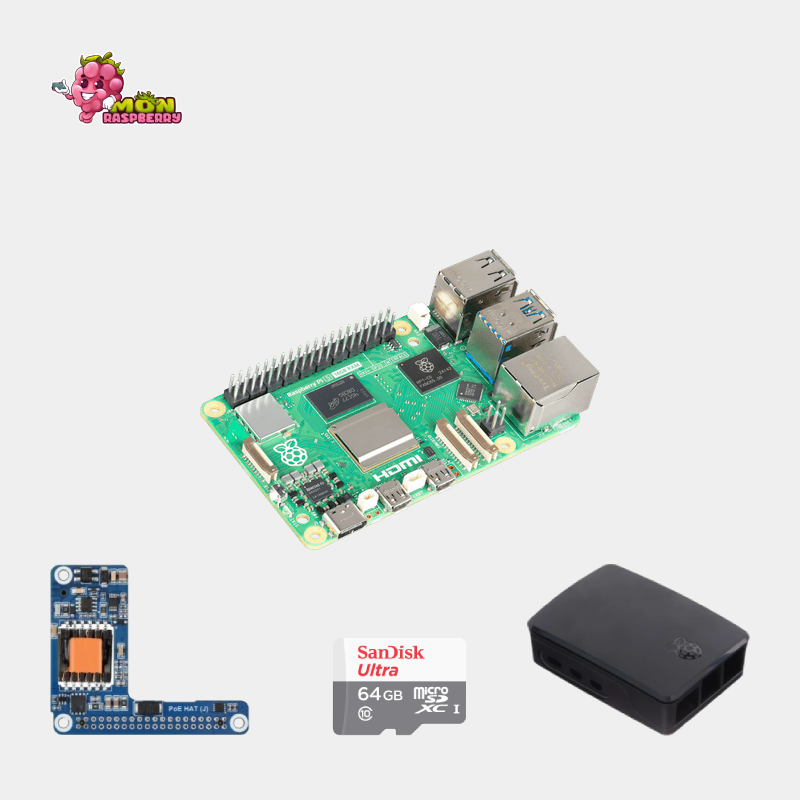
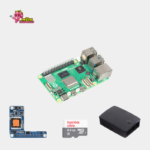
- Raspberry Pi 5 from 1 to 16 GB, official ventilated case and Waveshare PoE+ HAT (J)
- Power and network through a single Ethernet cable (IEEE 802.3af/at, 5 V 5 A), 2 m Cat6 cable included
- SanDisk Ultra 64 GB microSD with Raspberry Pi OS pre-installed
Business, school or public body? business account Education offers
Raspberry Pi 5 PoE Kit
133,90 € – 634,90 €Price range: 133,90 € through 634,90 € INCL. VAT


- Description
- Additional information
Description
Raspberry Pi 5 PoE Kit: a single network cable for power and data
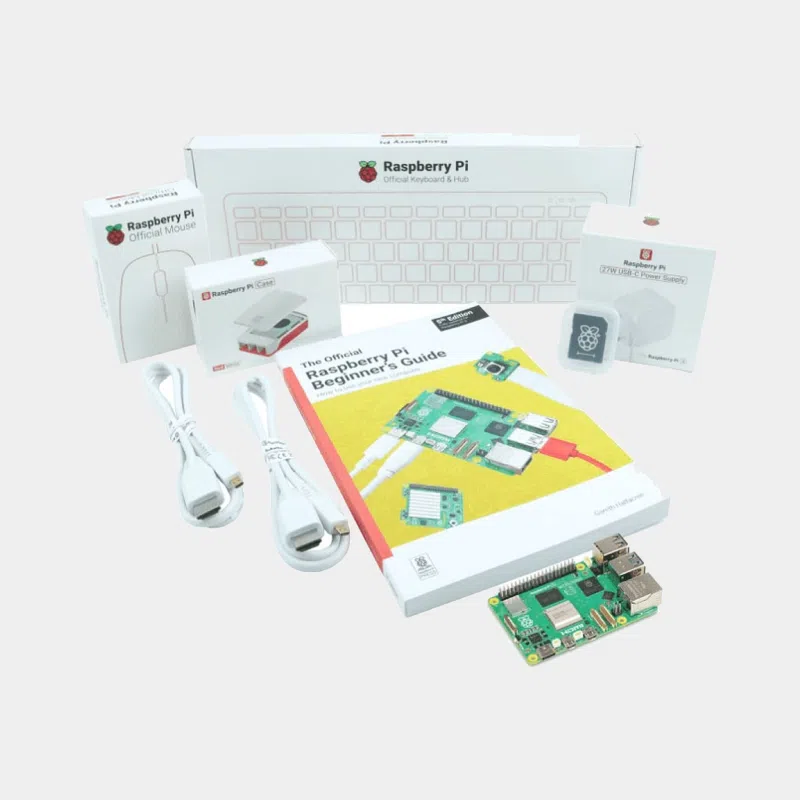
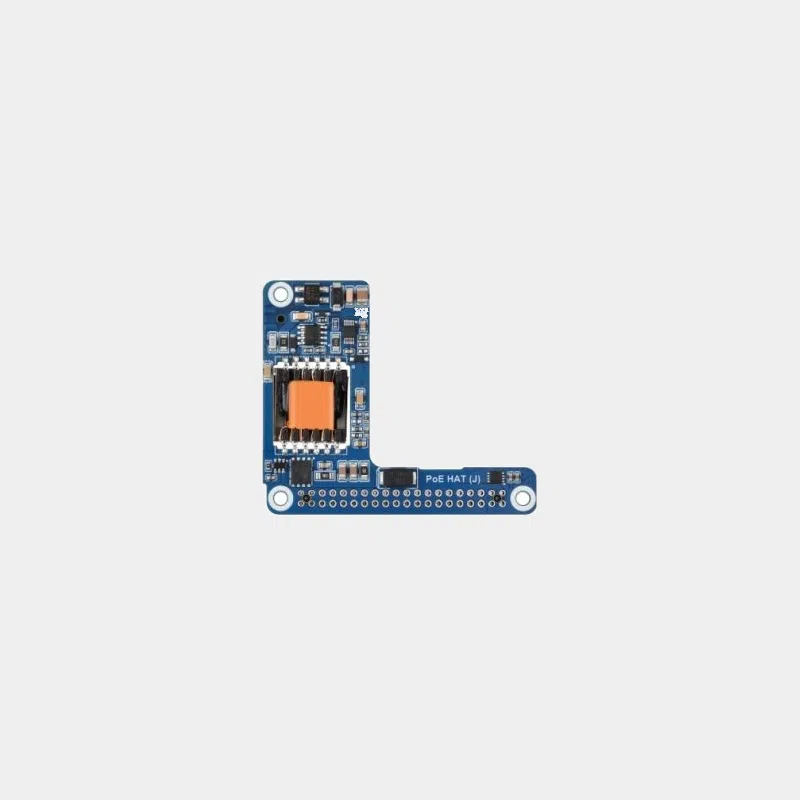
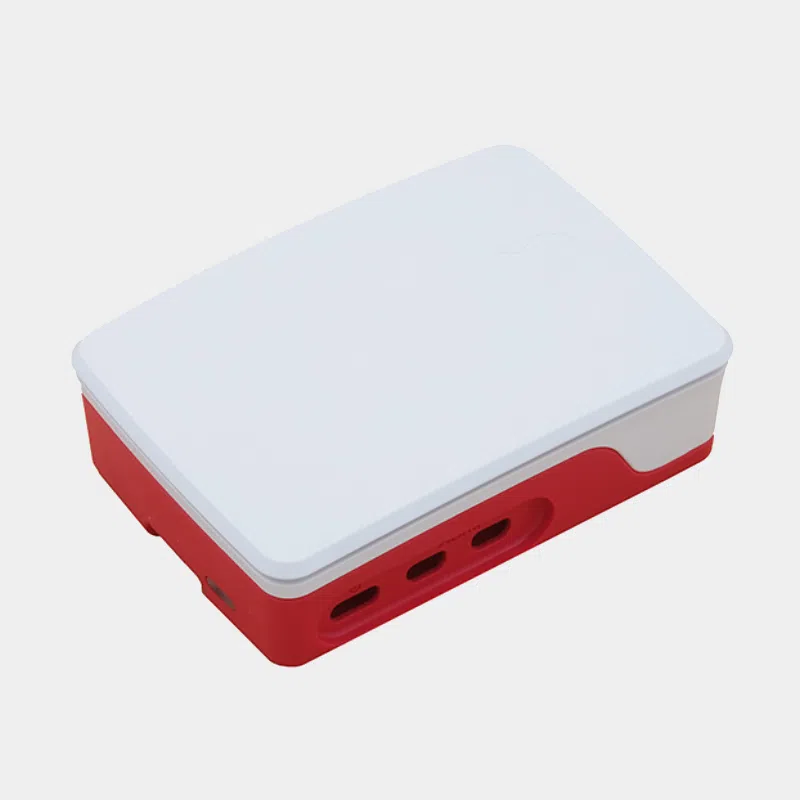
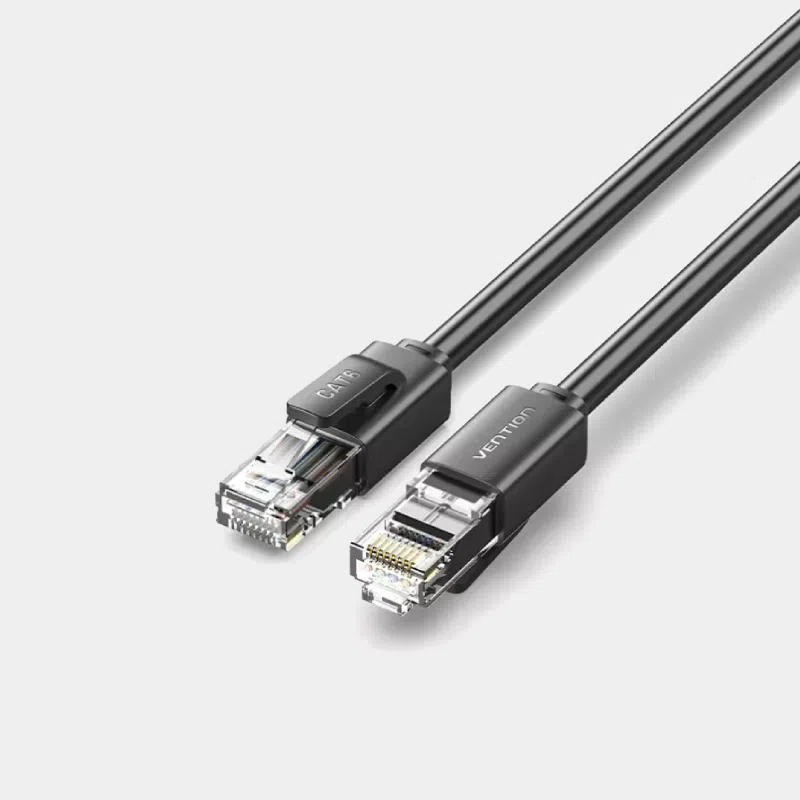
This Raspberry Pi 5 PoE kit brings together everything you need to run a Raspberry Pi 5 with a single Ethernet cable: the Raspberry Pi 5 board with the amount of memory of your choice (1, 2, 4, 8 or 16 GB), the official ventilated Raspberry Pi 5 case, the Waveshare PoE+ HAT (J) designed to fit inside this case, a SanDisk Ultra 64 GB microSD card with Raspberry Pi OS pre-installed and a 2-metre Cat6 Ethernet cable. Connected to a PoE switch or an injector, the Raspberry Pi boots up powered and connected to the network, with no power adapter or electrical outlet nearby.
Highlights
- A single cable : the HAT draws the power carried by the Ethernet cable (IEEE 802.3af/at standard) and supplies up to 5 V 5 A to the Raspberry Pi 5.
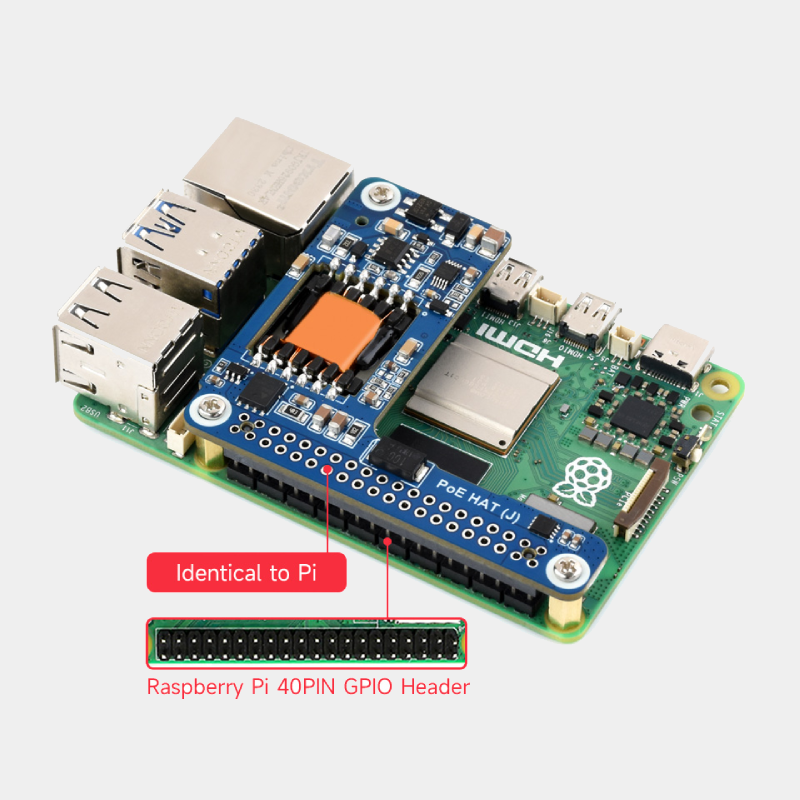
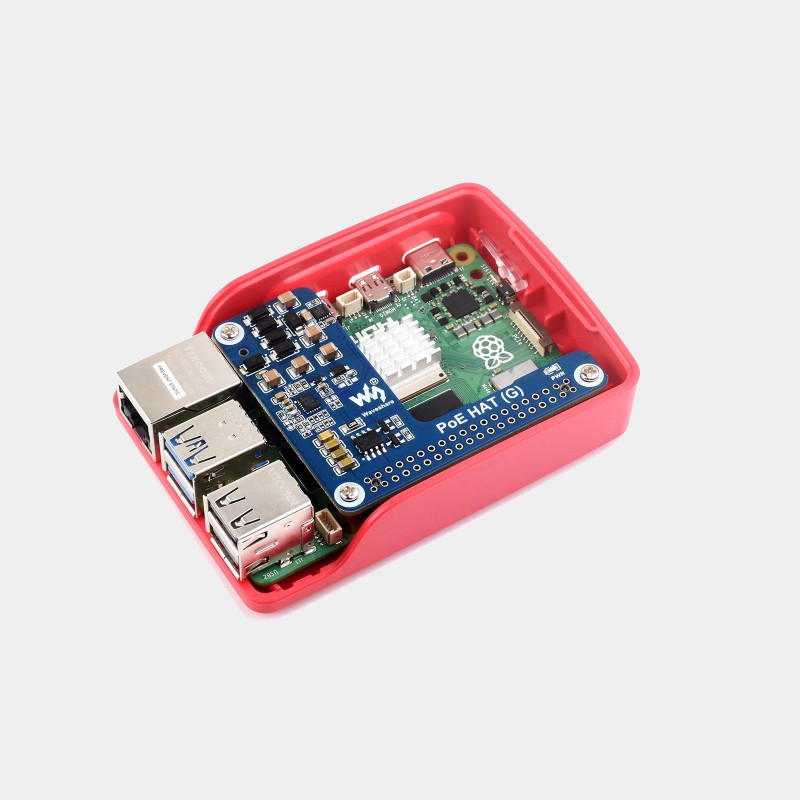
- Official case retained : the PoE+ HAT (J) has an L shape that leaves room for the fan and heatsink of the official case, and the lid closes normally.
- Active cooling : the case fan, PWM-controlled by the Raspberry Pi 5, keeps the board cool during continuous operation.
- Ready to boot : SanDisk Ultra 64 GB microSD supplied with Raspberry Pi OS pre-installed and 2 m Cat6 Ethernet cable included.
- Five versions : from 1 GB for a sensor or a small network service to 16 GB for a server or local AI.
Kit contents
| Element | Detail |
|---|---|
| Raspberry Pi 5 | 1, 2, 4, 8 or 16 GB of LPDDR4X memory depending on the chosen version, Broadcom BCM2712 quad-core Cortex-A76 processor at 2.4 GHz |
| Official Raspberry Pi 5 case | built-in PWM-controlled fan, processor heatsink, removable lid |
| Waveshare PoE+ HAT (J) | IEEE 802.3af/at, 38 to 57 V DC input, 5 V output up to 5 A via the GPIO header, isolated switching power supply, 2×2 and 2×20 connectors and standoffs included |
| SanDisk Ultra 64 GB microSD card | microSDXC UHS-I, class A1, Raspberry Pi OS pre-installed |
| RJ45 Cat6 Ethernet cable | 2 m long, to connect the Raspberry Pi 5 to your PoE switch or injector |
Not included: the PoE switch or PoE injector. No USB-C power supply is needed when the kit is powered via PoE.
Raspberry Pi 5 specifications
| Features | Value |
|---|---|
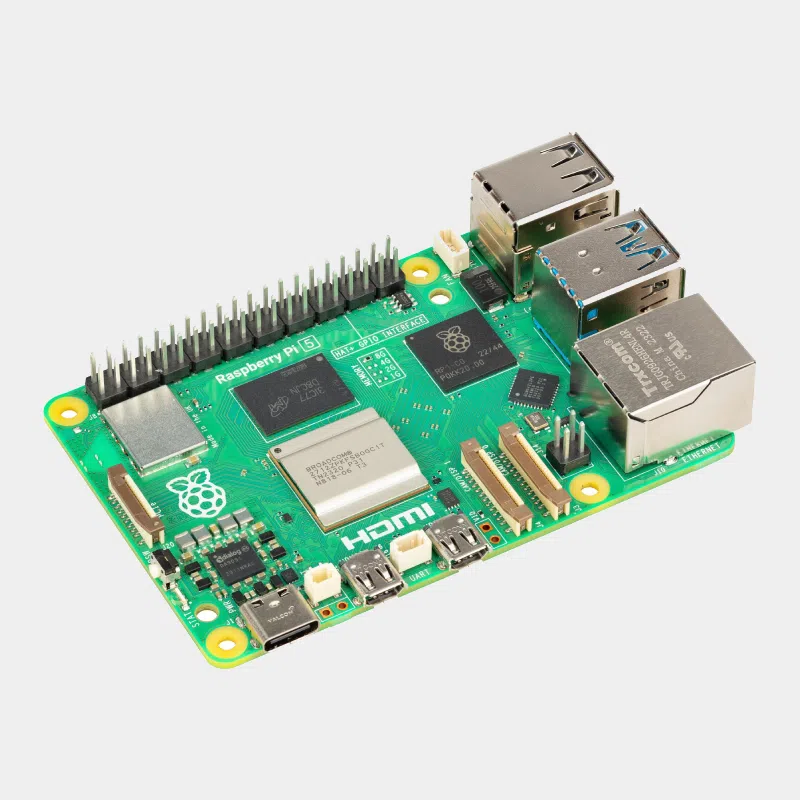
| Processor | Broadcom BCM2712, 4 x 64-bit Cortex-A76 at 2.4 GHz |
| Graphics | VideoCore VII, 2 x micro-HDMI 4Kp60 outputs |
| Memory | 1, 2, 4, 8 or 16 GB LPDDR4X |
| Network | Gigabit Ethernet with PoE+ support (with HAT), dual-band Wi-Fi 5 802.11ac, Bluetooth 5.0 / BLE |
| USB | 2 x USB 3.0, 2 x USB 2.0 |
| Expansion | 40-pin GPIO, PCIe 2.0 x1 interface, 2 MIPI camera or display connectors |
How much memory should you choose?
- 1 GB : IoT node, network sensor, lightweight gateway, DNS server or small Linux service without a graphical interface.
- 2 GB : Pi-hole, Home Assistant, MQTT broker, Node-RED, network monitoring.
- 4 GB : digital signage, dashboard, several Docker containers, lightweight network video recording.
- 8 GB : versatile home server, many containers, development workstation.
- 16 GB : virtualisation, databases, local AI models, heavy continuous workloads.
PoE use cases
Power over Ethernet is ideal wherever it is easier to run a network cable than a mains power supply:
- Rack and technical room : several Raspberry Pi boards powered from the same PoE switch, with no power strip or power adapters.
- Digital signage : signage screen or dashboard mounted on the wall or ceiling.
- Camera and monitoring : a Raspberry Pi with a camera module placed up high, powered by its network cable.
- Home automation and IoT : gateway or sensor node installed in a garage, an attic or a cellar.
- Remote reboot : with a managed PoE switch, simply turning the port off and on again restarts a frozen Raspberry Pi.
Compatibility and points to watch
- PoE source required : the Ethernet cable must be connected to a PoE switch or an IEEE 802.3af/at compliant injector, for example our TP-Link 4-port PoE+ switch or the Raspberry Pi PoE+ Injector. A standard switch only provides the network.
- PoE or PoE+ : an 802.3af (PoE) source is enough for light use. To take advantage of the HAT's 5 A, especially with a drive or power-hungry USB peripherals, choose an 802.3at (PoE+) source.
- USB current : when powered via the GPIO header, the Raspberry Pi 5 limits the current of its USB ports by default. Add
usb_max_current_enable=1in/boot/firmware/config.txtorPSU_MAX_CURRENT=5000viasudo rpi-eeprom-config --editto also remove the warning at boot. - No hot-plugging : only install or remove the HAT with the Raspberry Pi powered off.
- Raspberry Pi 5 only : the PoE+ HAT (J) is designed for the Raspberry Pi 5 (and the Compute Module 5 on a compatible carrier board). For a Raspberry Pi 4 or 3 B+, see the Raspberry Pi PoE+ HAT.
Assembly
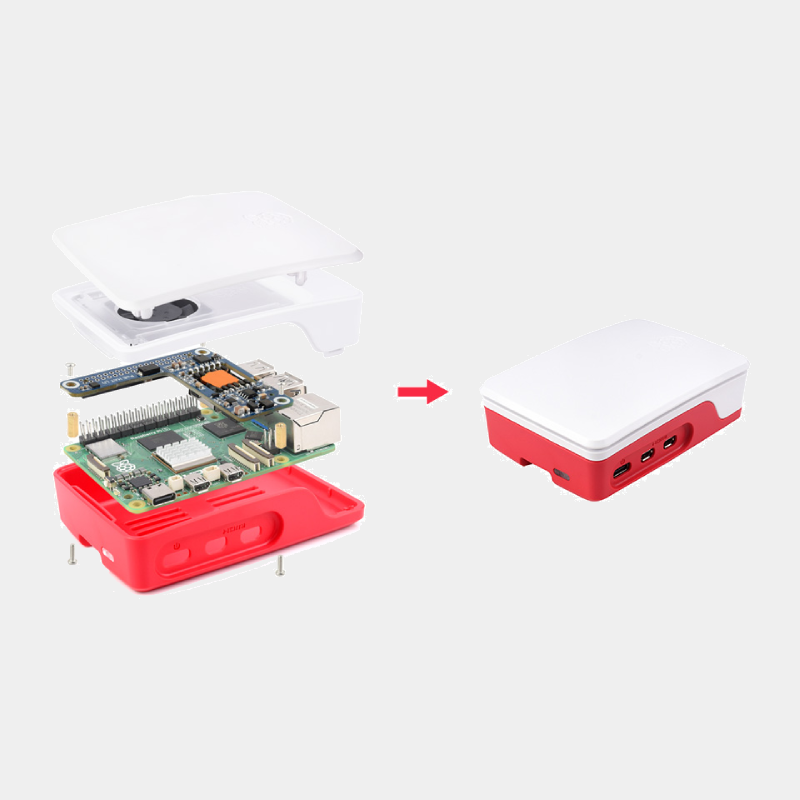
- Place the Raspberry Pi 5 in the base of the official case.
- Screw in the standoffs supplied with the HAT.
- Plug the PoE+ HAT (J) onto the 40-pin GPIO header and the 4-pin PoE header of the Raspberry Pi 5, then fix it onto the standoffs.
- Refit the ventilated frame of the case, connecting the fan to its dedicated connector on the Raspberry Pi 5, then clip on the lid.
- Insert the microSD, connect the supplied Ethernet cable to your PoE source: the Raspberry Pi boots into Raspberry Pi OS.
Frequently asked questions
Do I need a USB-C power supply as well?
No, if your switch or injector provides PoE. The HAT powers the Raspberry Pi 5 through the GPIO header. Without a PoE source, a standard USB-C power supply can still be used.
Can the official case fan still be used?
Yes. The PoE+ HAT (J) was designed in an L shape to fit inside the official Raspberry Pi 5 case without removing the ventilated frame: the fan stays connected to the Raspberry Pi 5 and is controlled automatically.
Which PoE switch should I choose?
Any IEEE 802.3af/at compliant switch or injector is suitable. A PoE+ (802.3at) model provides the headroom needed to use the HAT's full power with USB peripherals.
Does PoE reduce network speed?
No. Power and data travel over the same cable without disrupting the Raspberry Pi 5's Gigabit Ethernet link.
Which version should I choose for Home Assistant or Pi-hole?
A 2 GB version is enough for Pi-hole or a standard Home Assistant installation. Choose 4 GB or more if you plan many integrations, additional containers or a database.
Is the system already installed?
Yes, the SanDisk Ultra 64 GB microSD is supplied with Raspberry Pi OS pre-installed. You can reflash it at any time with Raspberry Pi Imager to install another system.
Order with confidence on MONRASPBERRY : shipped within 24/48 h after receipt of payment from our stock based in France, free pickup point delivery on orders of €200 or more, official and tested products, returns within 14 days (with return authorization) and payment by Visa, Mastercard, PayPal, Apple Pay or Google Pay.
Additional information
| Random Access Memory (RAM) | 1GB, 2GB, 4GB, 8GB, 16GB |
|---|
In the same category...
Raspberry Pi 5 kit with NVMe SSD

Ollama Local AI Kit: private LLM server Raspberry Pi 5 16 GB + NVMe 512 GB